

Aula 03: Funções dos Profissionais do SCFV
Olá estudante!
Hoje vamos falar sobre as Funções dos Profissionais do SCFV, primeiro é importante conhecer a estrutura da equipe do SCFV. Nos próximos módulos teremos aulas sobre Técnico de Referência, Educador Social e Psicólogo no SCFV, sendo esse último um modulo especial. Dessa forma, estabelecemos essa aula no modo escrito e descritivo para pesquisa e entendimento de cada cargo e a vivência sobre os cargo serão disponíveis nas aulas citadas.
Esta deve ser constituída por: 1. Técnico de Referência do CRAS com atuação no SCFV, com formação de nível superior (conforme a Resolução CNAS nº 17/2011); 2. Orientador Social ou Educador Social (conforme a descrição apresentada na Resolução CNAS nº 9/2014.7). São categorias profissionais de nível superior que, preferencialmente, poderão atender as especificidades dos serviços socioassistenciais:
• Antropólogo;
• Economista Doméstico;
• Pedagogo;
• Sociólogo;
• Terapeuta ocupacional; e
• Musicoterapeuta.
São categorias profissionais de nível superior que, preferencialmente, poderão compor a gestão do SUAS:
• Assistente Social
• Psicólogo
• Advogado
• Administrador
• Antropólogo
• Contador
• Economista
• Economista Doméstico
• Pedagogo
• Sociólogo
• Terapeuta ocupacional
Os profissionais de nível superior que integram as equipes de referência e a gestão do SUAS deverão possuir: Diploma de curso de graduação emitido por instituição de ensino superior devidamente credenciada pelo Ministério da Educação – MEC e Registro profissional no respectivo Conselho Regional, quando houver.
A Resolução CNAS n° 09/2014: ratifica e reconhece as ocupações e as áreas de ocupações profissionais de ensino médio e fundamental do SUAS, em consonância com a NOB-RH/SUAS e estabelece suas atribuições. Como ocupações profissionais com ensino médio completo que desempenham funções de apoio ao provimento dos serviços, programas, projetos, benefícios, transferência de renda e ao CadÚnico, diretamente relacionadas às finalidades do SUAS, reconhece:
• Educador Social;
• Orientador Social;
• Cuidador Social.
Ainda para o cumprimento dessas funções, reconhece como ocupação profissional com ensino fundamental completo o Auxiliar de Cuidador Social. É sempre prezar por uma formação de equipes multi e interdisciplinares, considerando suas especificidades e necessidades. A composição das equipes de referência considerando:
• Número de indivíduos/famílias referenciados;
• Necessidades/especificidades locais e dos serviços; e
• Aquisições que devem ser garantidas aos usuários.
O Perfil Profissional do trabalhador do SUAS deve ser planejado pelos gestores de acordo com as normativas do SUAS, as orientações técnicas, as características do território e dos serviços, programas, projetos, benefícios e transferência de renda a serem ofertados, o trabalho social requisitado e as aquisições a serem garantidas aos usuários. Sobre o regime de contratação dos trabalhadores pode ser:
Servidores Públicos Estatutários: São profissionais que realizaram concurso publico e a relação jurídica de trabalho é disciplinada por leis específicas, denominadas estatutos.
Servidores Públicos Trabalhistas – Celetistas: São aqueles regidos pelas regras da Consolidação das Leis do Trabalho, podem ser DT – tem natureza contratual e se formaliza pela celebração de um contrato por prazo determinado.
Cargo em Comissão: São cargos de funções de confiança e cargos em comissão, destinados apenas às atribuições de direção, chefia e assessoramento, e “declarados em lei de livre nomeação e exoneração”.
EQUIPE CRAS
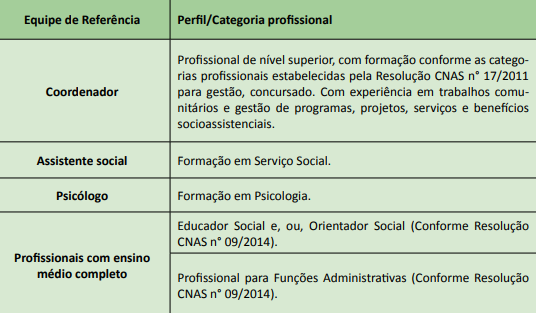
*Essas funções também existem no CRAS: Motorista, segurança, cadastrador do CadÚnico e limpeza;
EQUIPE CRAS OU CENTROS DE CONVIVÊNCIA, REFERENCIADOS AO CRAS
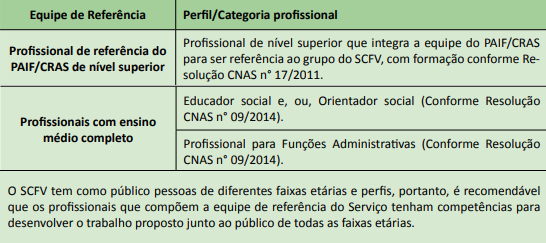
Veja a seguir as descrições das funções:
Cuidador Social
- Desenvolver atividades de cuidados básicos essenciais para a vida diária e instrumentais de autonomia e participação social dos usuários, a partir de diferentes formas e metodologias, contemplando as dimensões individuais e coletivas;
- Desenvolver atividades para o acolhimento, proteção integral e promoção da autonomia e autoestima dos usuários;
- Atuar na recepção dos usuários possibilitando uma ambiência acolhedora;
- Identificar as necessidades e demandas dos usuários;
- Apoiar os usuários no planejamento e organização de sua rotina diária;
- Apoiar e monitorar os cuidados com a moradia, como organização e limpeza do ambiente e preparação dos alimentos;
- Apoiar e monitorar os usuários nas atividades de higiene, organização, alimentação e lazer;
- Apoiar e acompanhar os usuários em atividades externas;
- Desenvolver atividades recreativas e lúdicas;
- Potencializar a convivência familiar e comunitária;
- Estabelecer e, ou, potencializar vínculos entre os usuários, profissionais e familiares;
- Apoiar na orientação, informação, encaminhamentos e acesso a serviços, programas, projetos, benefícios, transferência de renda, ao mundo do trabalho por meio de articulação com políticas afetas ao trabalho e ao emprego, dentre outras políticas públicas, contribuindo para o usufruto de direitos sociais;
- Contribuir para a melhoria da atenção prestada aos membros das famílias em situação de dependência; n. apoiar no fortalecimento da proteção mútua entre os membros das famílias;
- Contribuir para o reconhecimento de direitos e o desenvolvimento integral do grupo familiar;
- Apoiar famílias que possuem, dentre os seus membros, indivíduos que necessitam de cuidados, por meio da promoção de espaços coletivos de escuta e troca de vivência familiar;
- Participar das reuniões de equipe para o planejamento das atividades, avaliação de processos, fluxos de trabalho e resultado.
Orientador Social ou Educador Social
PERFIL: Função exercida por profissional com, no mínimo, nível médio de escolaridade, conforme dispõe a Resolução CNAS nº 09/2014. O orientador social tem atuação constante junto ao(s) grupo(s) do SCFV e é responsável pela criação de um ambiente de convivência participativo e democrático.
ATRIBUIÇÕES:
- Desenvolver atividades socioeducativas e de convivência e socialização visando à atenção, defesa e garantia de direitos e proteção aos indivíduos e famílias em situações de vulnerabilidade e, ou, risco social e pessoal, que contribuam com o fortalecimento da função protetiva da família;
- Desenvolver atividades instrumentais e registro para assegurar direitos, (re)construção da autonomia, autoestima, convívio e participação social dos usuários, a partir de diferentes formas e metodologias, contemplando as dimensões individuais e coletivas, levando em consideração o ciclo de vida e ações intergeracionais;
- Assegurar a participação social dos usuários em todas as etapas do trabalho social;
- Apoiar e desenvolver atividades de abordagem social e busca ativa;
- Atuar na recepção dos usuários possibilitando ambiência acolhedora;
- Apoiar na identificação e registro de necessidades e demandas dos usuários, assegurando a privacidade das informações;
- Apoiar e participar no planejamento das ações;
- Organizar, facilitar oficinas e desenvolver atividades individuais e coletivas de vivência nas unidades e, ou, na comunidade;
- Acompanhar, orientar e monitorar os usuários na execução das atividades;
- Apoiar na organização de eventos artísticos, lúdicos e culturais nas unidades e, ou, na comunidade;
- Apoiar no processo de mobilização e campanhas intersetoriais nos territórios de vivência para a prevenção e o enfrentamento de situações de risco social e, ou, pessoal, violação de direitos e divulgação das ações das Unidades socioassistenciais;
- Apoiar na elaboração e distribuição de materiais de divulgação das ações;
- Apoiar os demais membros da equipe de referência em todas etapas do processo de trabalho;
- Apoiar na elaboração de registros das atividades desenvolvidas, subsidiando a equipe com insumos para a relação com os órgãos de defesa de direitos e para o preenchimento do Plano de Acompanhamento Individual e, ou, familiar;
- Apoiar na orientação, informação, encaminhamentos e acesso a serviços, programas, projetos, benefícios, transferência de renda, ao mundo do trabalho por meio de articulação com políticas afetas ao trabalho e ao emprego, dentre outras políticas públicas, contribuindo para o usufruto de direitos sociais;
- Apoiar no acompanhamento dos encaminhamentos realizados;
- Apoiar na articulação com a rede de serviços socioassistenciais e políticas públicas;
- Participar das reuniões de equipe para o planejamento das atividades, avaliação de processos, fluxos de trabalho e resultado;
- Desenvolver atividades que contribuam com a prevenção de rompimentos de vínculos familiares e comunitários, possibilitando a superação de situações de fragilidade social vivenciadas;
- Apoiar na identificação e acompanhamento das famílias em descumprimento de condicionalidades;
- Informar, sensibilizar e encaminhar famílias e indivíduos sobre as possibilidades de acesso e participação em cursos de formação e qualificação profissional, programas e projetos de inclusão produtiva e serviços de intermediação de mão de obra;
- Acompanhar o ingresso, frequência e o desempenho dos usuários nos cursos por meio de registros periódicos;
- Apoiar no desenvolvimento dos mapas de oportunidades e demandas.
Administrativas
- Desempenhar atividades de apoio à gestão administrativa;
- Apoiar nas áreas de recursos humanos, administração, compras e logística;
- Sistematizar, organizar e prestar informações sobre as ações da assistência social a gestores, entidades e, ou, organizações de assistência social, trabalhadores, usuários e público em geral;
- Recepcionar e agendar atendimento e entrevistas para as ações próprias dos serviços socioassistenciais e para inserção dos usuários no CadÚnico;
- Organizar, catalogar, processar e conservar documentos, cumprindo todo o procedimento administrativo necessário, inclusive em relação aos formulários do CadÚnico, prontuários, protocolos, dentre outros;
- Controlar estoque e patrimônio;
- Apoiar na organização e no processamento dos convênios, contratos, acordos ou ajustes com as entidades e, ou, organizações de assistência social.
Função de limpeza
- Desempenhar atividades de limpeza com o objetivo de manter todos os ambientes limpos e organizados;
- Trabalhar seguindo as normas de segurança, higiene, qualidade e proteção ao meio ambiente e às pessoas e, no desempenho das atividades, utilizar-se de capacidades comunicativas.
Funções de transporte
a. terrestre:
-
-
-
- transportar as equipes de referência e usuários do SUAS;
- dirigir e manobrar veículos;
- realizar verificações e manutenções básicas do veículo;
- trabalhar seguindo normas de segurança, higiene, qualidade e proteção ao meio ambiente e às pessoas e, no desempenho das atividades, utilizar-se de capacidades comunicativas.
-
-
b. fluvial e marítima:
- transportar as equipes de referência e usuários do SUAS;
- navegar, atracar e desatracar embarcações;
- gerenciar tripulação;
- operar equipamentos de embarcação;
- monitorar e auxiliar na carga e descarga de equipamentos e materiais;
- controlar embarque e desembarque de passageiros;
- registrar dados da embarcação;
- verificar e realizar manutenções básicas de embarcações;
- utilizar equipamentos e dispositivos especiais tais como rádio e similares, sinalização sonora e luminosa, software de navegação e outros;
- trabalhar seguindo normas de segurança, higiene, qualidade e proteção ao meio ambiente e às pessoas e, no desempenho das atividades, utilizar-se de capacidades comunicativas.
Técnico de Referência do CRAS com atuação no SCFV
PERFIL: Profissional de nível superior que integra a equipe do CRAS para ser referência aos grupos do SCFV. Além do acompanhamento da execução do serviço, por meio de participação nas atividades de planejamento e assessoria ao orientador social, cabe a este profissional assegurar, na prestação do SCFV, a aplicação do princípio da matricialidade sociofamiliar que orienta as ações de proteção social básica da assistência social.
ATRIBUIÇÕES: Entre as atribuições do técnico de referência, estão:
- conhecer as situações de vulnerabilidade social e de risco das famílias beneficiárias de transferência de renda (BPC, PBF e outras) e as potencialidades do território de abrangência do CRAS;
- acolher os usuários e ofertar informações sobre o serviço;
- realizar atendimento particularizado e visitas domiciliares a famílias referenciadas ao CRAS;
- desenvolver atividades coletivas e comunitárias no território;
- encaminhar usuários ao SCFV;
- participar da definição dos critérios de inserção dos usuários no serviço;
- assessorar as unidades que desenvolvem o SCFV no território;
- assessorar o(s) orientador(es) social(ais) do SCFV;
- acompanhar o desenvolvimento dos grupos existentes nas unidades ofertantes do serviço, acessando relatórios, participando em reuniões de planejamento, avaliação, etc.;
- manter registro do planejamento do SCFV no CRAS;
- avaliar, com as famílias, os resultados e impactos do SCFV.
- garantir que as informações sobre a oferta do SCFV estejam sempre atualizadas no SISC e utilizá-las como subsídios para a organização e planejamento do serviço.
Coordenador do CRAS
Perfil: Escolaridade mínima de nível superior, concursado, com experiência em gestão pública; domínio da legislação referente à política nacional de assistência social e direitos sociais; conhecimento dos serviços, programas, projetos e/ou benefícios socioassistenciais; experiência de coordenação de equipes, com habilidade de comunicação, de estabelecer relações e negociar conflitos; com boa capacidade de gestão, em especial para lidar com informações, planejar, monitorar e acompanhar os serviços socioassistenciais, bem como de gerenciar a rede socioassistencial local.
Atribuições:
• Articular, acompanhar e avaliar o processo de implantação do CRAS e a implementação dos programas, serviços,
projetos de proteção social básica operacionalizadas nessa unidade;
• Coordenar a execução e o monitoramento dos serviços, o registro de informações e a avaliação das ações, programas, projetos, serviços e benefícios;
• Participar da elaboração, acompanhar e avaliar os fluxos e procedimentos para garantir a efetivação da referência
e contrarreferência;
• Coordenar a execução das ações, de forma a manter o diálogo e garantir a participação dos profissionais, bem
como das famílias inseridas nos serviços ofertados pelo CRAS e pela rede prestadora de serviços no território;
• Definir, com participação da equipe de profissionais, os critérios de inclusão, acompanhamento e desligamento
das famílias, dos serviços ofertados no CRAS;
• Coordenar a definição, junto com a equipe de profissionais e representantes da rede socioassistencial do território, o fluxo de entrada, acompanhamento, monitoramento, avaliação e desligamento das famílias e indivíduos nos
serviços de proteção social básica da rede socioassistencial referenciada ao CRAS;
• Promover a articulação entre serviços, transferência de renda e benefícios socioassistenciais na área de abrangência do CRAS;
• Definir, junto com a equipe técnica, os meios e as ferramentas teórico-metodológicos de trabalho social com famílias e dos serviços de convivência;
• Contribuir para avaliação, a ser feita pelo gestor, da eficácia, eficiência e impactos dos programas, serviços e projetos na qualidade de vida dos usuários;
• Efetuar ações de mapeamento, articulação e potencialização da rede socioassistencial no território de abrangência
do CRAS e fazer a gestão local desta rede;
• Efetuar ações de mapeamento e articulação das redes de apoio informais existentes no território (lideranças comunitárias, associações de bairro);
• Coordenar a alimentação de sistemas de informação de âmbito local e monitorar o envio regular e nos prazos, de
informações sobre os serviços socioassistenciais referenciados, encaminhando-os à Secretaria Municipal (ou do
DF) de Assistência Social;
• Participar dos processos de articulação intersetorial no território do CRAS;
• Averiguar as necessidades de capacitação da equipe de referência e informar a Secretaria de Assistência Social (do
município ou do DF);
• Planejar e coordenar o processo de busca ativa no território de abrangência do CRAS, em consonância com diretrizes da Secretaria de Assistência Social (do município ou do DF);
• Participar das reuniões de planejamento promovidas pela Secretaria de Assistência Social (do município ou do DF),
contribuindo com sugestões estratégicas para a melhoria dos serviços a serem prestados;
• Participar de reuniões sistemáticas na Secretaria Municipal, com presença de coordenadores de outro(s) CRAS (quando for o caso) e de coordenador(es) do CREAS (ou, na ausência deste, de representante da proteção especial).
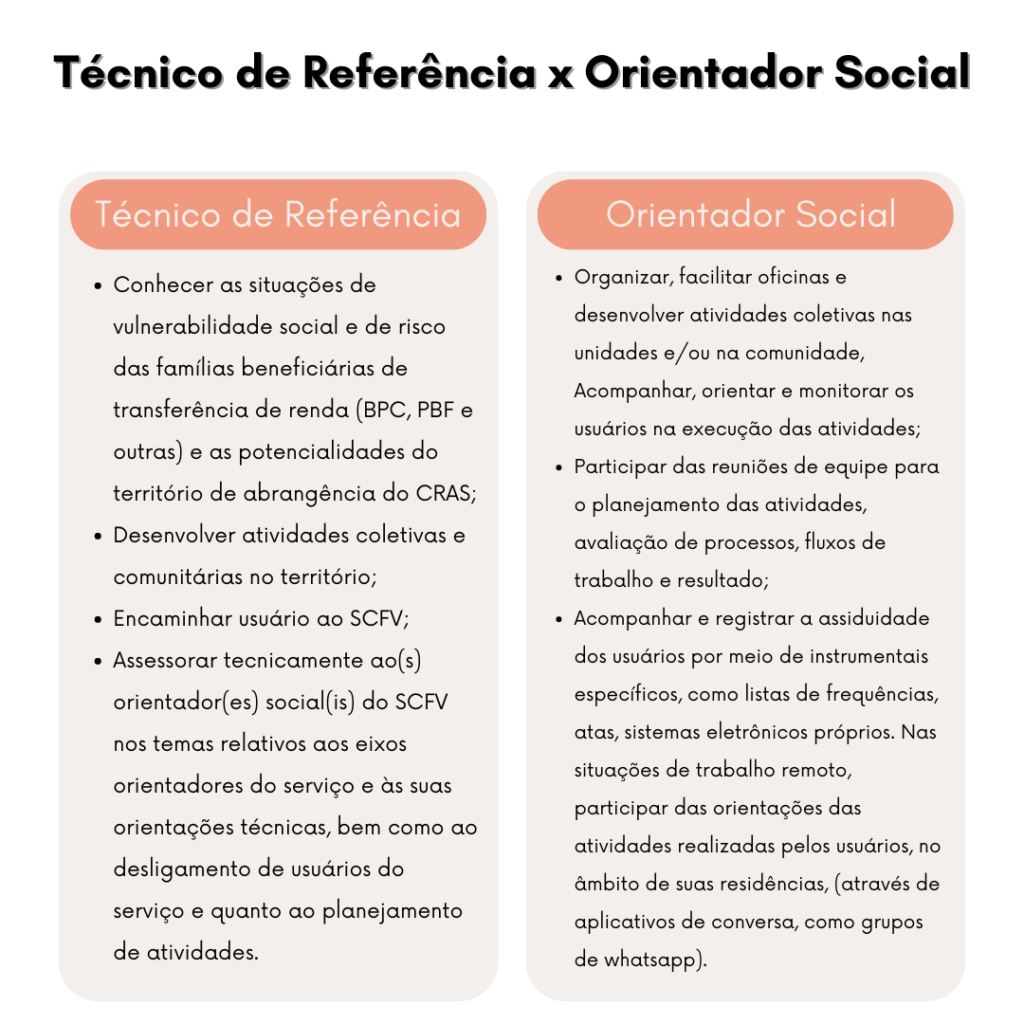
* Quadro do INFORME TÉCNICO – Orientações às gestões e trabalhadores na condução de ações do SCFV no contexto da COVID-19 | 002/2021 – CPSB/SSS/SAAS/SETASC-MT – Cuiabá – MT, 18 de Maio de 2021.
Texto em:
BRASÍLIA, Caderno de Orientações Técnicas Sobre os Gastos no Pagamento dos Profissionais das Equipes de
Referência do SUAS / Ministério do Desenvolvimento Social e Agrário.
Orientações Técnicas: Centro de Referência de Assistência Social – CRAS/ Ministério do Desenvolvimento Social e Combate à Fome. – 1. ed. – Brasília: Ministério do Desenvolvimento Social e Combate à Fome, 2009.
| Telefone: (27) 9 9272 4701
E-mail: contato@quallitypsi.com.br |